
Office Layout Tips for Optimal Acoustics
Table of Contents
Office acoustics play a major role in productivity, concentration, and overall employee well-being. Poor sound control can lead to constant distractions, reduced focus, and higher stress levels, especially in open-plan environments. A well-planned office layout can significantly improve how sound travels, is absorbed, and is managed throughout the workspace.
This guide covers practical office layout tips to help create optimal acoustics, whether you are designing a new office or improving an existing one.
Why Office Acoustics Matter
Noise is one of the most common workplace complaints. Conversations, phone calls, office equipment, and foot traffic can quickly overwhelm a space if acoustics are not considered.
Good office acoustics help improve concentration and task performance by reducing unnecessary distractions throughout the workday. They also minimize listening fatigue, making it easier for employees to stay focused for longer periods. In addition, well-managed sound supports privacy for conversations and meetings, preventing sensitive discussions from carrying across the office. Together, these benefits contribute to a calmer, more comfortable work environment that promotes productivity and well-being.
Layout decisions influence how sound behaves long before acoustic materials are added.
Understand How Sound Moves in an Office
Sound travels differently depending on the size, shape, and surfaces within an office. Hard surfaces reflect sound, while soft materials absorb it. Open layouts allow noise to spread easily, while enclosed spaces help contain it.
Key factors that affect sound movement include:
- Ceiling height
- Floor materials
- Wall placement
- Furniture density
- Room proportions
Designing with these factors in mind helps reduce noise issues from the start.
Zone the Office by Noise Level

One of the most effective layout strategies is zoning.
When planning an office layout, it helps to separate the space into zones based on noise levels and activities. Quiet zones can be designated for focused, individual work where minimal distraction is essential, while collaborative zones support discussions and teamwork. Meeting rooms should be set aside for calls and group sessions to contain sound, and break areas are best placed away from workstations to prevent casual conversations and movement from disrupting concentration.
Placing noisy activities away from concentration-heavy areas reduces sound overlap and distraction.
Use Furniture to Control Sound Flow
Furniture placement can act as a sound management tool.
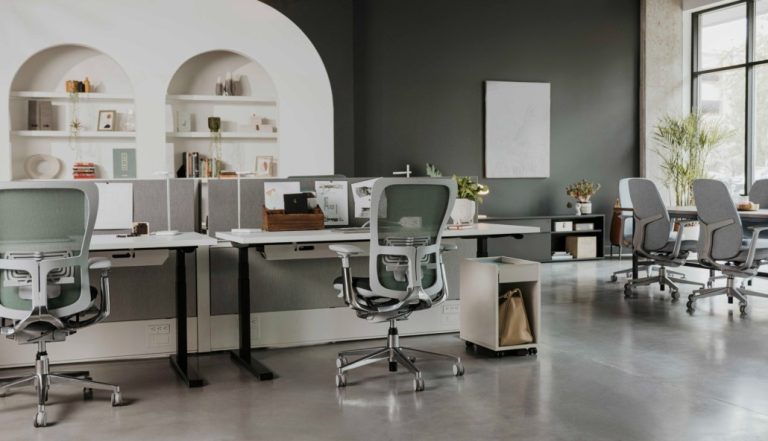
Effective approaches include using bookshelves or storage units as sound barriers to help block and absorb noise between areas. Positioning desks so employees do not face each other directly can reduce the spread of conversation and distractions. Grouping workstations in smaller clusters rather than long rows helps limit how far sound travels across the office, while adding high-backed seating or booths creates semi-private spaces that naturally contain noise and support focused work.
Furniture helps break up sound paths and limits how far noise travels.
Optimize Desk and Workstation Layout
Desk arrangement directly affects how sound spreads across a workspace.
To improve acoustics, it helps to avoid placing desks in long, uninterrupted lines that allow sound to travel freely across the office. Keeping some distance between collaborative areas and individual workstations reduces overlapping noise, while desk dividers or screens can provide an added layer of sound control where needed. Orienting desks away from high-traffic walkways also minimizes distractions from movement and conversation, helping create a quieter and more focused workspace.
Even small adjustments can noticeably reduce perceived noise levels.
Pay Attention to Ceiling Design
Ceilings are often overlooked but play a major role in office acoustics.
Helpful ceiling strategies include installing acoustic ceiling tiles to absorb sound and reduce echo throughout the workspace. In open areas, suspended baffles or panels can further control noise by breaking up sound reflections before they spread. It is also important to avoid leaving large exposed concrete surfaces untreated, as they tend to reflect sound and amplify noise levels across the office.
Ceiling treatments help absorb sound before it reflects back into the room.
Incorporate Soft Materials Into the Layout
Hard, reflective surfaces amplify noise. Balancing them with softer materials improves sound quality.
Layout-friendly options include adding carpets or area rugs in work zones to help absorb sound at floor level, as well as using fabric-covered partitions to reduce noise transfer between areas. Upholstered seating also softens sound while improving comfort, and curtains or wall hangings in larger spaces can further dampen echoes and improve overall acoustic balance.
These materials absorb sound without requiring structural changes.
Design Meeting Rooms for Sound Containment

Meeting rooms are common noise sources in offices.
To reduce sound leakage, meeting rooms should be placed away from quiet work areas where concentration is critical. Using solid walls instead of glass-only partitions helps contain conversations, while properly sealed doors prevent sound from escaping into surrounding spaces. Including sound-absorbing finishes inside the room further improves privacy by limiting echo and reducing the transmission of noise beyond the meeting area.
Good placement and design prevent conversations from spilling into the main workspace.
Address Open-Plan Office Challenges
Open offices benefit from collaboration but often suffer acoustically.
To improve acoustics in open-plan offices, introducing acoustic panels between different zones helps absorb sound and reduce noise travel. Creating small enclosed focus rooms gives employees a quiet option for concentrated work or private calls, while limiting the size of open areas prevents noise from spreading too widely. Using varied ceiling heights or design elements to break sound paths can also disrupt sound flow and improve overall acoustic comfort.
The goal is balance, not total silence.
Consider Future Growth and Flexibility
Office layouts should anticipate change.
Acoustic-friendly planning includes using modular furniture that can be easily rearranged as the office evolves, along with movable partitions that allow spaces to be reconfigured without major disruption. Scalable acoustic treatments make it possible to add or adjust sound control as needed, while flexible zoning ensures the layout can adapt to team growth and changing work styles over time.
Planning ahead avoids costly redesigns later.
Final Thoughts
Optimal office acoustics start with smart layout decisions. By zoning spaces, arranging furniture strategically, and incorporating sound-absorbing elements, offices can reduce noise, improve focus, and create a more comfortable environment for everyone.
Good acoustic design does not require sacrificing collaboration or aesthetics. It simply requires thoughtful planning that treats sound as a key part of the workspace experience.
Frequently Asked Questions
Can office acoustics be improved without major renovations?
Yes. Furniture placement, zoning, and adding soft materials can significantly improve acoustics without construction.
Are open offices always noisy?
Not necessarily. With proper layout, zoning, and acoustic treatment, open offices can be both collaborative and quiet.
What is the biggest acoustic mistake in office design?
Ignoring sound flow early in the layout process is the most common mistake, leading to costly fixes later.